
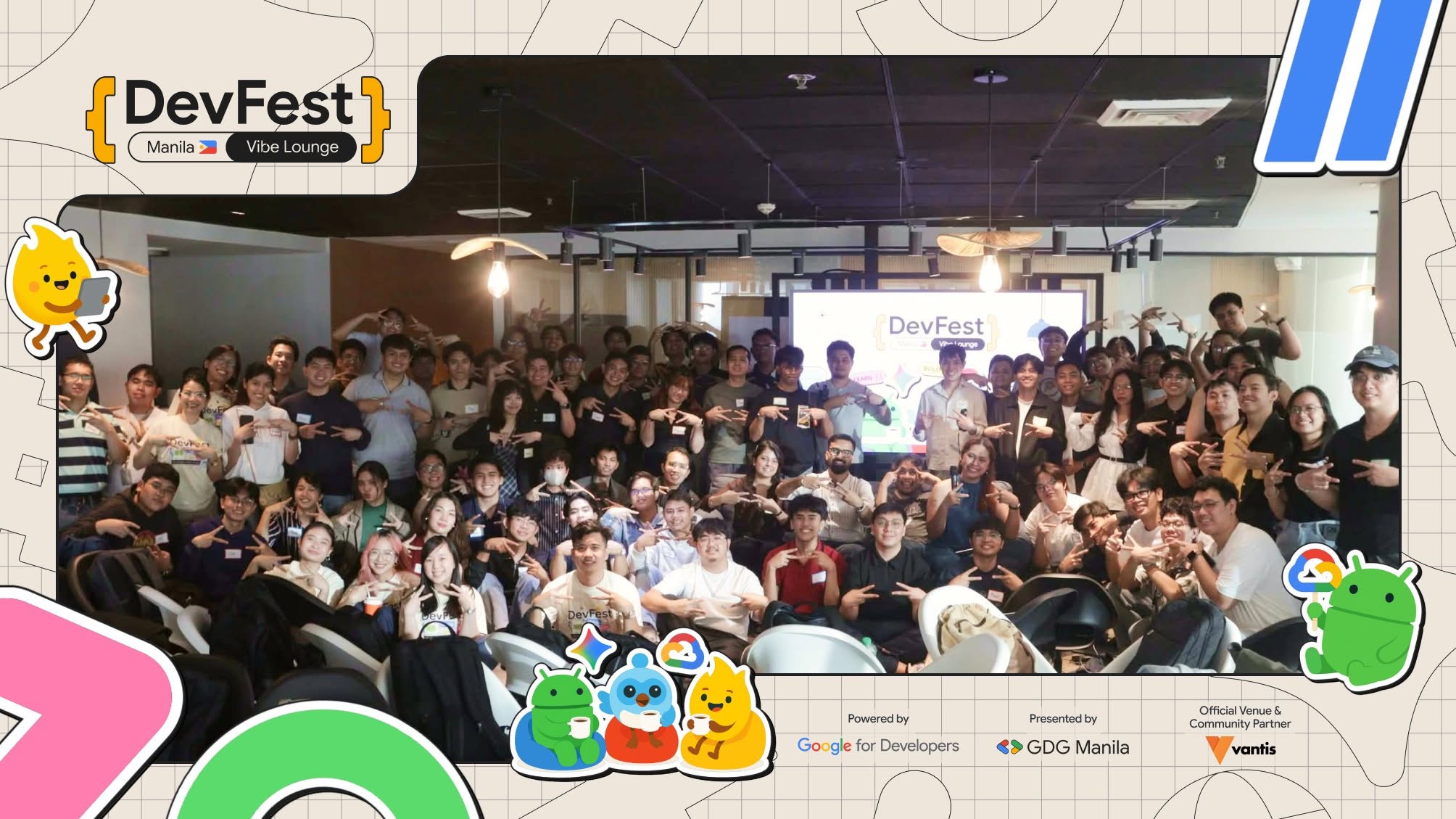
Thirty minutes isn’t a lot of time to turn an idea into something presentable, especially when working with AI-assisted development. That was part of the challenge at DevFest Manila 2026: Vibe Lounge, where developers and technology enthusiasts gathered to explore emerging tools, exchange ideas, and put their knowledge into practice.
Organized by Google Developer Groups (GDG) Manila, DevFest Manila 2026 took place on October 17, 2026, at Vantis PH in PBCom Tower, Makati City. It featured technical discussions, hands-on development activities, and opportunities to connect with professionals in the technology industry.
I had the opportunity to attend as part of SCT Solutions’ Internship Program, which supports students in gaining practical experience, developing technical skills, and engaging with the broader technology community.
For SCT Solutions, participation in events like DevFest is also part of its effort to stay informed about emerging technologies and evolving industry practices. As AI continues to influence software development, understanding these changes is increasingly relevant to how technology companies approach their work.
The event was particularly interesting to me because several of its topics aligned with technologies I’d already been exploring independently, especially AI development tools, agent-based workflows, and software engineering.
Exploring AI Harnesses at DevFest Manila 2026
One of the sessions I looked forward to most was Toni-Jan Keith Monserrat’s discussion on AI harnesses, which explored development workflows, tool integrations, and the infrastructure surrounding AI coding agents.
An AI harness provides the environment in which an AI model operates. Depending on its design, it can manage context, connect external tools, and coordinate tasks within a development workflow.
I’ve been experimenting with similar setups in my personal projects, customizing agent configurations and integrating different tools to better fit how I work. Hearing another developer’s approach gave me additional perspectives on how these systems can be organized.


One consideration that stood out to me was the balance between customization and complexity. Adding specialized agents, plugins, and automation can expand what a system can do, but these additions also introduce more components to maintain.
The goal isn’t necessarily to use more tools, but to understand which tools actually improve the development process.
This is also relevant from SCT Solutions’ perspective. For an IT services provider, keeping up with emerging technologies involves more than knowing what tools are available. It also means understanding their practical applications, limitations, and potential value in existing workflows.
Sessions like these provide an opportunity to explore new approaches and consider how they might apply to real development environments.
Putting Ideas into Practice: The 30-Minute Build Sprint
Beyond the technical discussions, one of the highlights of DevFest Manila 2026 was the 30-minute build sprint, where participants applied concepts related to spec-driven development and AI-assisted programming.
Spec-driven development emphasizes defining requirements, constraints, and expected behavior before implementation. This becomes particularly useful when working with AI coding agents, where vague instructions can produce results that don’t necessarily align with the developer’s intentions.
The time constraint made this especially apparent. With only thirty minutes, deciding what to build and communicating those requirements clearly became part of the challenge.
During the sprint, I had the opportunity to present Bopify, a personal project that combines my interests in programming, music, and visual design.
Bopify: Combining Music, Design, and Development
Bopify is a small, Spotify-inspired music-sharing application that lets users turn their favorite music into customizable visual slides.
The application displays a listener’s top artist and five top tracks using Spotify’s available rankings. Users can connect their Spotify account, select a listening period, customize the color palette, and download their personalized slides as PNG images.
Rather than building a comprehensive music analytics dashboard, I wanted to focus on something visually expressive and easy to share.
Music has always been one of my personal interests, and with my background in graphics and visual art, I particularly enjoyed working on the application’s interface.
The sprint also allowed me to reflect on how AI-assisted development fits into my creative process. While AI tools can help accelerate implementation, I still want to retain control over the design decisions and functionality of what I’m building.
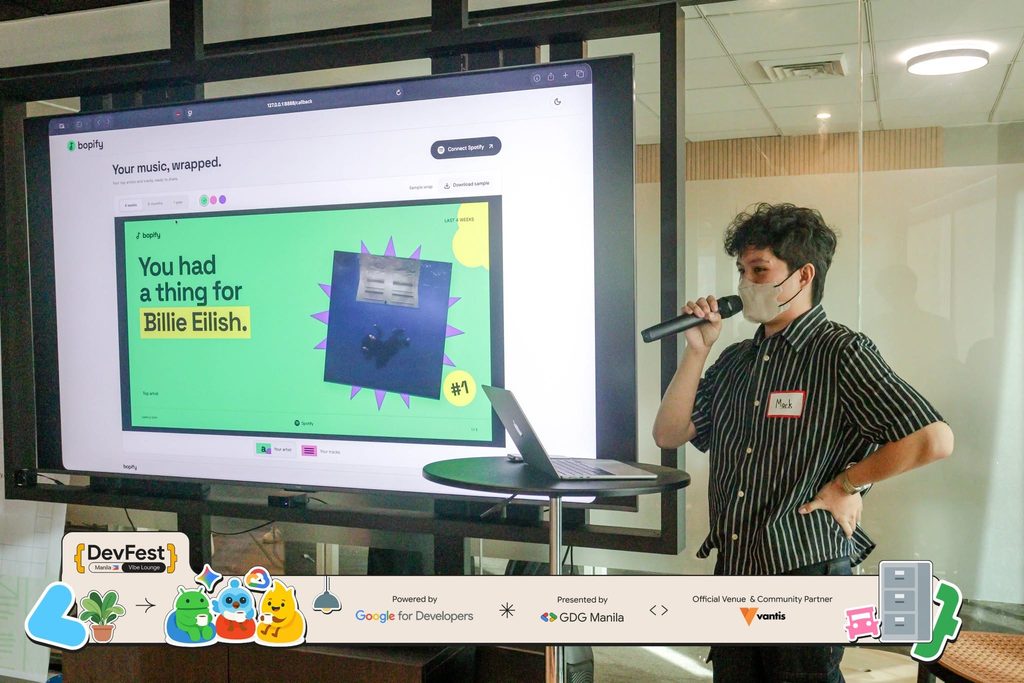
Presenting Bopify was one of my favorite parts of the event, especially because it brought together several interests I’ve been pursuing outside my academic coursework.
From a learning perspective, the experience also reinforced the importance of clearly defining a project’s scope before implementation, a practice that extends beyond AI development and applies to software engineering more generally.
Exploring Creative Applications of Google AI
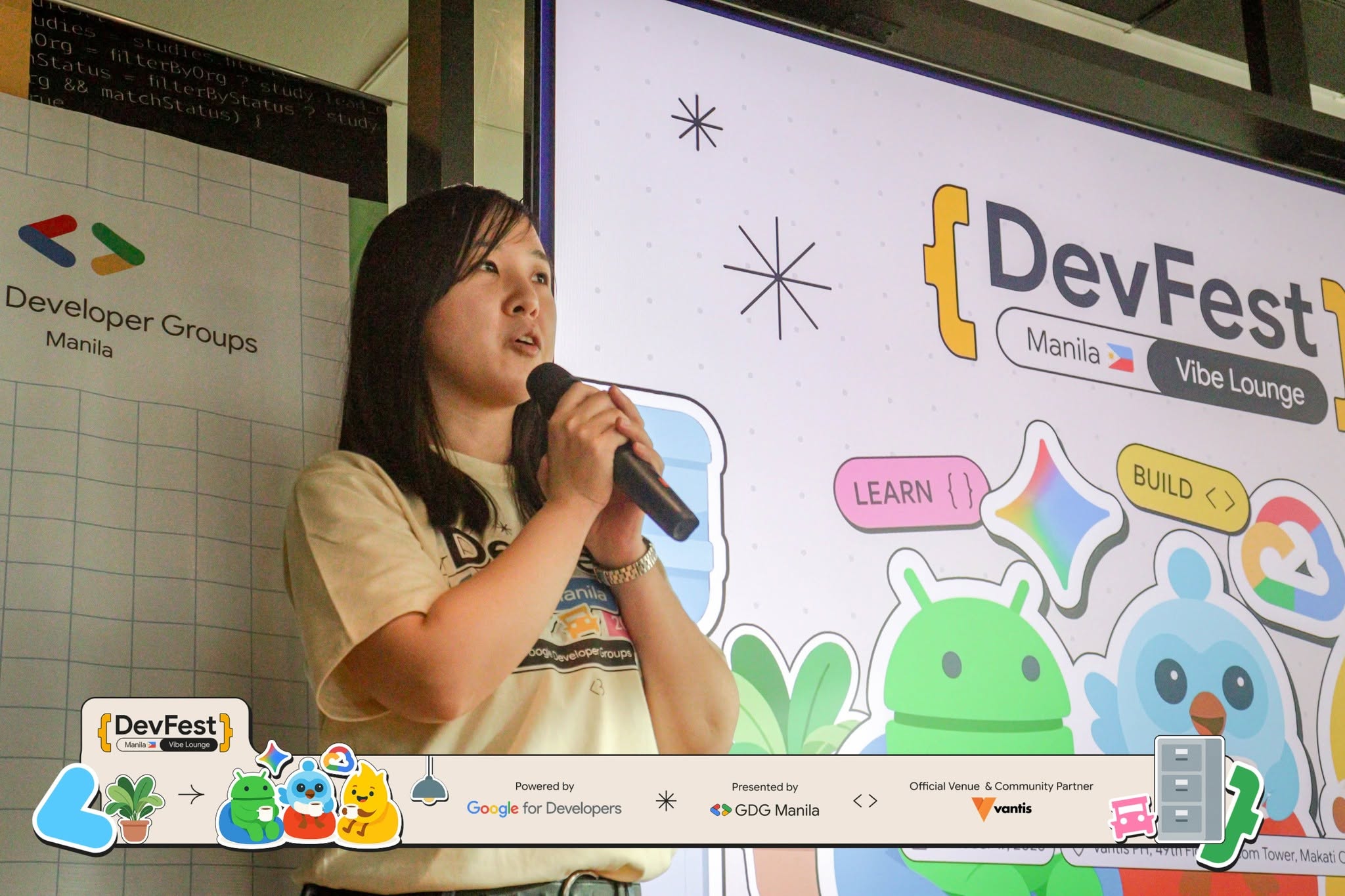
Another session that caught my attention was Sourav Das’s demonstration of an agentic video studio powered by Google AI.
The presentation explored how multiple AI agents and tools could work together in a video production workflow, including the costs and technical challenges involved.
I found it interesting to see agent-based systems applied to creative production rather than conventional software development. Similar ideas used to coordinate coding agents can also support tasks involving content generation and video assembly.
Given my interest in visual design, I appreciated seeing these technologies applied in another context.
The session also highlighted how AI development is extending into different areas of digital work.
For SCT Solutions, exploring these applications contributes to a broader understanding of how emerging technologies may influence the services businesses need and the tools available to deliver them.
Learning Beyond the Internship
Beyond the technical sessions, one of the things I appreciated most was meeting developers and professionals already working in the technology industry.
As a BS Mathematics undergraduate at the University of the Philippines Diliman, I’ve been pursuing programming and software engineering alongside my degree. Much of my experience has come from independent learning and personal projects, so I don’t always get the same opportunities to interact with people working in software development through my regular coursework.
At DevFest, I was able to exchange ideas, hear about different development practices, and learn from people with backgrounds and experiences different from my own.
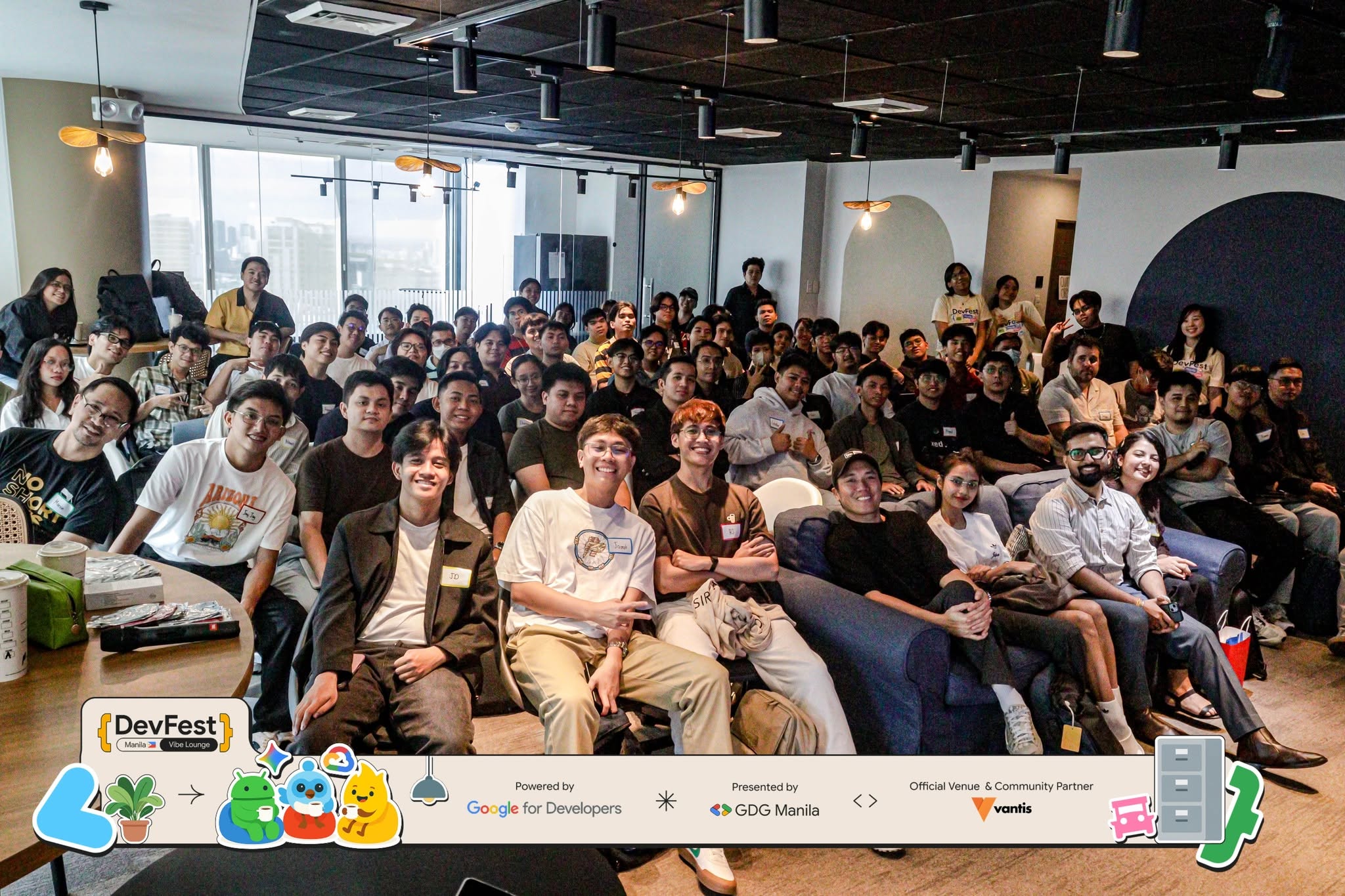
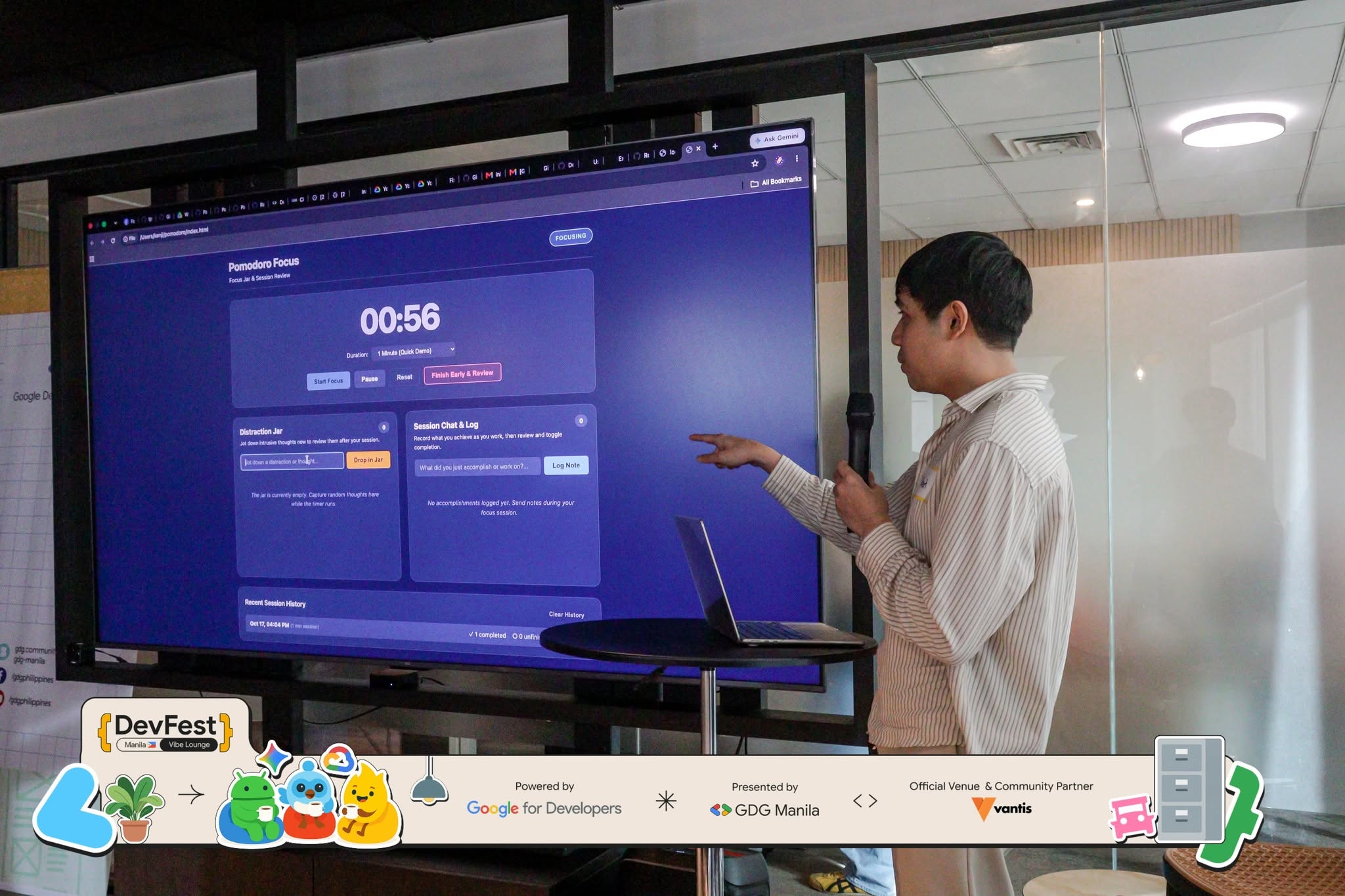
These conversations helped me see technologies I’d been exploring independently from a broader industry perspective.
This is also something I value about SCT Solutions’ Internship Program.
While internships provide opportunities to apply technical knowledge through assigned work, exposure to industry events adds another dimension to that learning. It allows students to engage with professional communities, become familiar with emerging practices, and develop a clearer understanding of the field they’re preparing to enter.
For me, attending DevFest helped connect my independent interests in programming and AI engineering with the broader professional environment.
Staying Relevant in an Evolving IT Industry
Artificial intelligence, automation, and new development tools continue to influence how software is built and how digital services are delivered.
For SCT Solutions, an IT Services Company providing digital solutions to businesses, staying relevant means continually learning about these changes and considering how they may affect existing practices and future services.
Events like DevFest Manila 2026 offer opportunities to hear directly from developers working with emerging technologies and to better understand their practical applications.
However, one thing I’ve come to appreciate through my own experience is that keeping up with technology doesn’t necessarily mean adopting every new tool.
It’s equally important to evaluate whether a particular approach solves an actual problem, improves a workflow, or introduces unnecessary complexity.
This was a recurring consideration for me throughout the event, particularly during the discussions on AI harnesses and spec-driven development.
I think this perspective applies both to my growth as a developer and to the broader work of technology companies like SCT Solutions.
By supporting participation in technical communities and industry learning opportunities, SCT Solutions’ internship program helps connect individual professional development with the company’s efforts to stay informed about changes in the technology landscape.
Looking Back on DevFest Manila 2026
DevFest Manila 2026: Vibe Lounge gave me several things to think about, particularly how I want to continue developing my AI-assisted workflows.
Toni’s session offered additional perspectives on custom harnesses and agent orchestration, while the build sprint allowed me to apply spec-driven development and present Bopify. I also enjoyed Sourav’s demonstration of agentic video production and its applications in creative work.


Just as importantly, I appreciated the opportunity to connect with developers and industry professionals, especially as someone pursuing software development alongside a Mathematics degree.
Through SCT Solutions’ Internship Program, attending DevFest became another opportunity to learn beyond my usual work and academic environment. It gave me new ideas to explore and a broader perspective on technologies that are increasingly relevant to the IT services industry.
I’m looking forward to applying what I’ve learned, continuing my experiments with AI development tools, and exploring how these approaches can contribute to both my personal projects and my work at SCT Solutions.
Thanks to Google Developer Groups Manila, Toni-Jan Keith Monserrat, Sourav Das, and everyone involved in organizing the event and sharing their experiences.